
What is Nation?
What is Nation?
by Katharine Gerbner
C.G.A. Oldendorp, a Moravian who interviewed Afro-Moravians in St. Thomas during the 1760s, spoke to several Africans who identified themselves as part of the Popo nation. From these interviews, we learn that the term Popo could be used to signify a political and geographic state of belonging, a kingdom, or a linguistic/cultural community.
One member of the Popo nation explained to Oldendorp that “their land reaches the sea,” and that “they knew the Danish and other forts, as well as the Amina and Akkran, very well.” Other Africans explained that “the Apossu/Apesche, Nagoo/Anagoo [i.e. Yoruba], Arrada, Attolli and Affong all belong to the Papaa.”1C. G. A. Oldendorp, Historie Der Caribischen Inseln Sanct Thomas, Sanct Crux Und Sanct Jan, ed. Gudrun Meier et al., vol. 1 (VWB – Verlag für Wissenschaft und Bildung, 2000), p. 441. As these quotations suggest, the term Popo was flexible: it could refer to the specific polities of Grand and Little Popo or it could be used more generally to refer to people living in the borderlands between present-day Togo and Benin.
While Popo encompassed a specific region of the West African coast, the term “Africa” referenced to a broad geographical expanse that encompassed many different nations. The reference to “Africa” raises questions about eighteenth-century ideas about African identity: had Damma heard the term “Africa” in her homeland, or was she introduced to it in the Caribbean? Did thinking about herself as an “African” become more important after Damma met and developed bonds with people from different regions in Africa? We know that the Moravian congregation Damma led was multi-ethnic, comprising individuals from as far north as Senegambia and as far south as the Kingdom of Kongo. How did this community shape Damma’s identification as an “African”?
While “Africa” was becoming an increasingly important mode of identification for people of African descent in the Americas, it is likely that Damma identified more strongly as someone from Popo than as someone from “Africa.” Her husband, Djacki, also identified himself as Popo, and Damma continued to speak the language of her homeland in St. Thomas, as evidenced by her letter to the Danish Queen (see Damma’s Life).
Adga / Aja Tome
In Damma’s Gbe text, she referred to her homeland as adga tome, rather than “Popo in Africa.” Adga tome is likely a reference to Aja country (or the Aja region) and the Aja people, an ethnic group living in what is now southwestern Benin.
According to Anthony Asiwaju and Robin Law, there is “considerable uncertainty” about the meaning and usage of “Aja,” and the term today has a broader use than it did in the eighteenth century.2A.I. Asiwaju and Robin Law, “From the Volta to the Niger, 1600-1800,” in History of West Africa, 3rd ed., ed. J.F.A. Ajayi and Michael Crowder, vol. 1 (Longman, 1985). Still, scholars generally agree that the Aja people trace their lineage to the ancestral home of Tado, a border region between current-day Togo and Benin, and that there were several migrations of Aja people from Tado to Notsie, Allada, Popo, and Whydah by the seventeenth century—though possibly earlier.
While adga likely refers to the Aja people, the term tome is formed by combining the word eto, which means “village” or “town” in Western Gbe (Ewe), with “me,” which means “inward, inner, or inside.” In Gbe, prefixes like e- and a- are dropped when the words they precede occur after other nouns, so in tome, the “e” drops off from eto since the word it follows is a noun, adga. This means that tome can be translated as “in the village,” “in the town,” “in the country,” “in the kingdom,” or “in the nation.”
The term tome, or tomé, is used twice in Damma’s letter. The first time, it is connected with adga to form the phrase adga tome that refers to Damma’s homeland. The second time, it is connected to the yovo, a term described in our essay “What is Race?” that can mean “white person,” “European,” or “foreigner,” and may originate from the term yevo, which can mean “another spirit” in Gungbe and Fongbe. In Dutch Creole yo vottomé was translated as blanco land, which means “white man’s country” or “the whites’ nation.” Either way, it is notable that Damma used the same Gbe word—tome—to refer to her homeland and to the “country,” “nation” or “land” of the whites.
While “nation” or “country” is the most likely meaning for tome, a later draft of Damma’s letter introduces uncertainty. In a scribal copy (Version 3), the word Tome is written as Tomas or Tomos. Was this a scribal error? Or was this intended as a reference to “St. Thomas,” the island in the Caribbean where Damma was living? Based on the similarity of the phrases adga tome and yovo tome, we think the most likely interpretation is that the reference to Tomas rather than tome was an error, introduced by a German-speaking scribe in Herrnhut who presumably did not know Gbe.
With the understanding that tome most likely means “nation” or “country” and adga refers to the Aja people, we can ask what it meant for Damma to think about adga tome rather than Poppo op Africa. How did the terms adga tome and Poppo resonate differently for her? Given that the Gbe languages don’t make any distinction between region of origin, country, and nation, how did Africans in the diaspora conceptualize these notions and refer to them? What can we learn about the evolving definitions of “country” and “nation” by considering that Damma used the same word, tome, to refer to both adga tome and yo vottomé, the “white man’s” country? These are the questions that these new translations allow us to ask.
Nations
In the Moravian baptismal register, Damma’s “nation” was listed as “Popo,” not “Adga.” The same is true of her husband Djacki, who was baptized alongside her in 1737.

Scholars of the African diaspora have debated how to interpret references to African “nations,” which many scholars have glossed as “ethnicities.” In the eighteenth-century Atlantic World, the term “nation” could refer to geographic spaces, kingdoms, ethnic groups, or other polities. For those enslaved and transported to the Americas, the meaning of their “nations” evolved as Africans and their descendants utilized nation signifiers to form new communities, kin relationships, and identities.
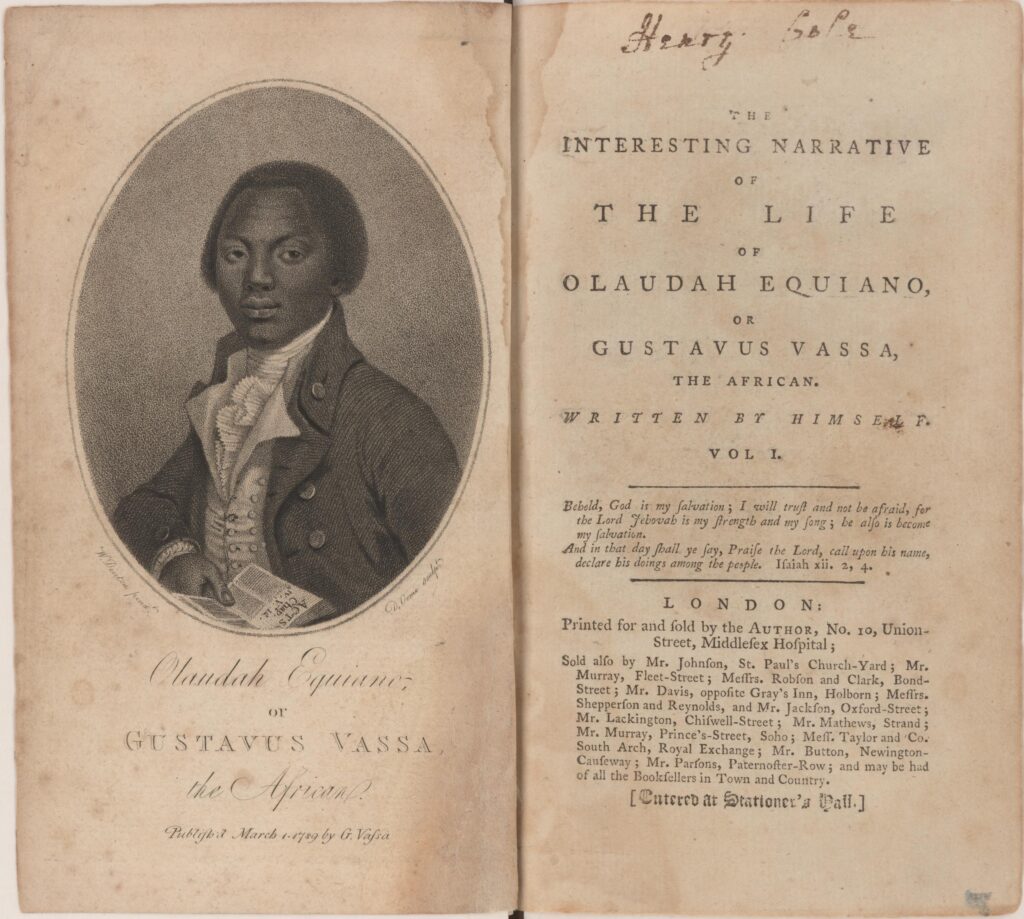
Alexander X. Byrd has traced how the famous African abolitionist, Olaudah Equiano, utilized the terms “country” and “nation” flexibly in his autobiography. For Equiano, who identified as “Eboe” (Igbo) and “African,” the term “nation” sometimes meant “town.” Equiano also used “nation” and “country” in a geopolitical sense, referring to sovereign political nations. “Nation” could also be a proto-racial term, for example when he found his “own nation” below deck on the slave ship.
Dianne Stewart and Tracey Hucks have argued that we should italicize the term nation for African diasporic people: Their “nation” identities were important, and they had both political and religious significance. Many Africans and African-descended people continued to use the term “nation” to identify themselves, their transnational communities, and their political and religious allegiances. At the same time, diasporic “nations” need to be distinguished from the formation of nation-states. For Stewart and Hucks, italicizing nation acknowledges the significance of the term while also differentiating it from modern conceptions.
Given this context, what can Damma’s reference to herself as adga and Popo reveal about the concept of the “nation” of diasporic Africans who were subjected to enslavement? While Damma began her Gbe letter by referencing adga, she chose to end her letter by referencing Popo. In the last line of her letter, she wrote, Minzu Gnonù en homea poppo, which can be interpreted as “I am a woman from Popo.”
This suggests that Damma identified strongly as both adga and Popo. This makes sense in the political and social context of West Africa, since Popo and Adga could be used to refer to the same region. It’s also possible that the term Popo may have developed into a more inclusive or recognizable term in St. Thomas, so Damma chose to end her letter with that reference. Either way, the co-existence of these two “nation” identifiers suggests that Damma considered herself to be both adga and from Popo.
Finally, Damma’s assertion that she was a “woman” from Popo is also important: she used her identification as adga and Popo as well as her gender identity to communicate a diplomatic message to another woman in a position of authority—Sophie Magdalene, queen of Denmark—asking her to support their Afro-Moravian community in St. Thomas.
Masthead image: Niels Hansen Møller, Fortsettelse af Kortet over Landkanten af Guinea fra Floden Volta til Jakin, fivorudi Kongerigerne Koto, Popo, Uhidah eller Juida og Ardraligge. Copenhagen, 1750. Courtesy of the John Carter Brown Library.
adga tome